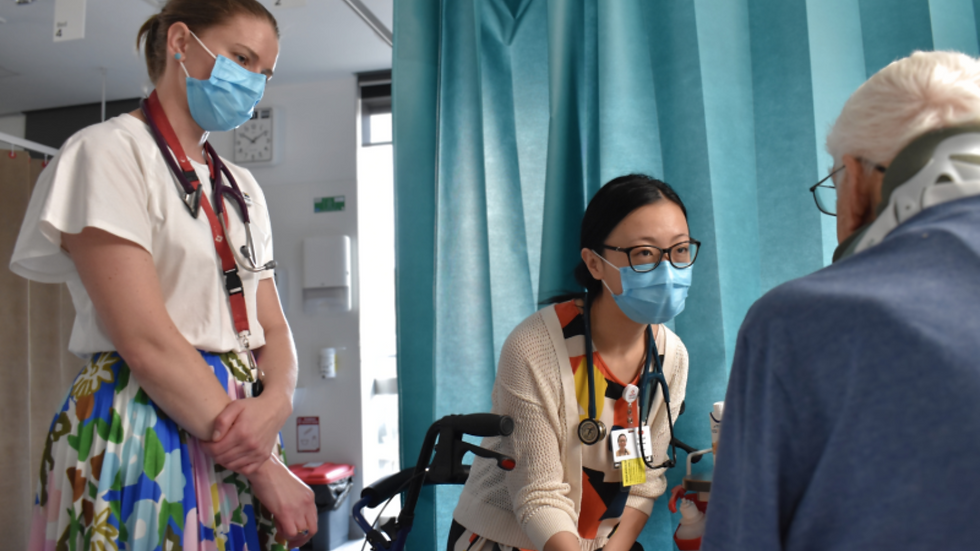
Accident & Trauma Care
Our Accident & Trauma Care Surgery Unit is equipped to handle critical and life-threatening emergencies with precision, speed, and expertise. Whether it’s a severe injury from an accident or a complex trauma case, our specialized team of surgeons, emergency physicians, and support staff work round the clock to provide comprehensive care.
When to Call for Emergency Trauma Care
24/7 If the environment is unsafe to assess the patient.
24/7 For life-threatening conditions or injuries that may worsen with movement (e.g., spinal or neck injuries).
24/7 For immediate medical attention, minor injuries can be stabilized with first aid and the patient brought to our 24-hour emergency clinic.
Emergency Services
Immediate surgeries for life-threatening conditions such as internal bleeding, severe fractures, and abdominal trauma.
Expert care for fractures, dislocations, and spinal injuries to restore mobility and stability.
Advanced management of head injuries, brain trauma, and spinal cord injuries.
Specialized treatment for children with urgent injuries or trauma, ensuring safe and effective care.
Rapid response for ligament tears, muscle injuries, and other sports-related trauma.
Treatment for acute injuries to the ear, nose, throat, and eyes, preserving critical functions.
Facilities Available
24/7 Emergency Response:- Fully operational emergency clinic and ambulance services.
Diagnostic Support:- On-site blood tests, X-rays, and CT scans for accurate assessment.
Specialist Intervention:- Immediate stabilization and transfer to operating theatres, stroke units, or catheterization labs as required.
Advanced Care:- Equipped to manage conditions like shock, sepsis, and organ injuries with the latest technology.

Frequently Asked Questions
What should I do immediately after a serious accident?
After a serious accident, seek emergency medical care immediately. Avoid moving the injured person unnecessarily, particularly if a spinal injury is suspected, unless there is an immediate danger.
At Tirupati Trauma Care Centre & Hospital, emergency trauma assessment focuses on identifying and treating life-threatening injuries first, followed by detailed evaluation of other injuries.
What types of accident and trauma injuries does TTCH treat?
Trauma care may involve:
Road traffic accident injuries
Head and brain injuries
Spinal injuries
Fractures and dislocations
Chest injuries
Abdominal injuries
Pelvic injuries
Limb injuries
Complex wounds
Soft tissue injuries
Tendon and nerve injuries
Crush injuries
Burns
Multiple injuries following major accidents
Treatment depends on the location and severity of the injury.
When does an accident injury require surgery?
Not every accident injury requires surgery. Surgery may be necessary when there is a severe fracture, internal bleeding, significant tissue damage, unstable injury, nerve or tendon injury, open wound, spinal or brain injury, or another condition that cannot be adequately managed with non-surgical treatment.
The treating team will assess the patient's condition, imaging and other investigations before recommending surgery.
How are multiple injuries managed after a major accident?
Patients with multiple injuries may require coordinated treatment from several specialties.
Depending on the injuries, the trauma team may involve orthopaedics, neurosurgery, plastic and reconstructive surgery, anaesthesia, critical care, radiology and other specialists.
The priority is to stabilise life-threatening injuries before addressing injuries that can be treated subsequently.
Can plastic and reconstructive surgery help after an accident?
Yes. Severe accidents can cause substantial damage to skin, muscles, soft tissues, nerves and other structures.
Plastic and reconstructive surgery may help with complex wound closure, skin grafting, flap reconstruction, soft tissue reconstruction, limb reconstruction and other procedures designed to restore function and cover damaged tissues.
At TTCH, reconstructive care can be coordinated with trauma and orthopaedic treatment for appropriate patients.
What happens if I have a head injury after an accident?
Head injuries require careful assessment because symptoms can vary from mild to life-threatening.
Symptoms such as loss of consciousness, repeated vomiting, worsening headache, seizures, confusion, unusual drowsiness, weakness, difficulty speaking or changes in vision require urgent medical attention.
Depending on the injury, patients may require neurological assessment, brain imaging, observation, intensive care or neurosurgical treatment.
How are fractures treated after an accident?
Fracture treatment depends on the type, location and severity of the fracture, as well as whether surrounding nerves, blood vessels or soft tissues have been damaged.
Treatment may include immobilisation, reduction, casting, internal fixation or other surgical procedures. Complex fractures may require coordinated orthopaedic and reconstructive treatment.
Can a badly injured limb be saved after an accident?
In selected cases, limb salvage may be possible even after severe trauma.
The outcome depends on factors such as the extent of tissue damage, blood supply, infection, bone and nerve injury, and how quickly appropriate treatment is provided.
Treatment may involve fracture stabilisation, vascular procedures, wound debridement, skin grafting, flap reconstruction, microsurgery and rehabilitation when appropriate
How long does recovery take after trauma surgery?
Recovery varies according to the severity and type of injury, surgical procedure, patient's general health and rehabilitation needs.
Minor injuries may recover within weeks, while multiple trauma, complex fractures, head injuries, spinal injuries and major soft tissue injuries can require months of treatment and rehabilitation.
The treating team will provide an individualised recovery plan based on the patient's injuries and progress.
Why choose Tirupati Trauma Care Centre & Hospital for accident and trauma surgery?
Tirupati Trauma Care Centre & Hospital is focused on providing comprehensive care for patients with traumatic injuries, from emergency assessment and stabilisation through surgery, reconstruction and recovery.
The hospital's multidisciplinary approach allows appropriate patients to access trauma, orthopaedic, neurosurgical, plastic and reconstructive, anaesthesia and critical care services according to their clinical needs.
For patients with complex injuries, this integrated approach can help reduce delays between specialties and support coordinated decision-making throughout the treatment journey.
Polytrauma Management


Open Fractures

Emergency Neurosurgery

Faciomaxillary Trauma

Revascularization And Replantation

Burns

Pediatric Trauma

Geriatric Trauma